





Winter asks a lot of any outdoor structure. Snow accumulates and compresses, ice forms and melts through dozens of freeze-thaw cycles, and road salt finds its way onto every surface near a front entrance or walkway. For homeowners who have invested in a deck, balcony or front porch, the question each fall is the same: what needs to be done before the cold arrives, and what can safely be left alone?
Aluminum railings change that conversation. Unlike wood, which can crack, warp and rot when moisture freezes inside it, or steel, which rusts wherever its coating is compromised, aluminum does not deteriorate in the same way. That means winterizing a deck railing made of aluminum is less about protection from the weather itself and more about a few simple steps that keep the finish clean, the hardware tight and spring cleanup short.
Century Aluminum Railings systems are built with powder-coated aluminum and tempered glass specifically for Canadian climates. With a short afternoon of preparation in the fall, those systems will come through winter looking and performing the way they did the day they were installed. This guide walks through what to do, what to avoid and how to handle snow, ice and de-icing products once the season sets in.
Why Fall Is the Right Time to Winterize a Deck Railing
Timing matters more than most homeowners expect. Once snow covers the deck, access to the bottom rail, post bases and mounting hardware is gone until spring. Anything that is left undone in October stays undone until March, and anything that was already starting to loosen or collect moisture spends the entire winter under ice.
Fall is also the easiest time to work. The deck is dry, temperatures are mild, and leaves and debris from the summer are visible rather than buried. A railing inspection and cleaning that takes an hour in October could take considerably longer in April after a season of neglect.
A fall winterizing routine for aluminum railings typically covers:
- Washing the powder-coated finish and glass panels
- Checking that posts are solid and fasteners are snug
- Clearing leaves and debris from the bottom rail and drainage channels
- Sealing any scratches that expose bare metal
- Preparing the right tools and de-icing products for snow season
None of these steps are complicated. The goal is simply to leave the railing clean, tight and clear so that moisture has nowhere to sit and nothing to work against during the months ahead.
Cleaning Aluminum Railings Before the Snow Arrives
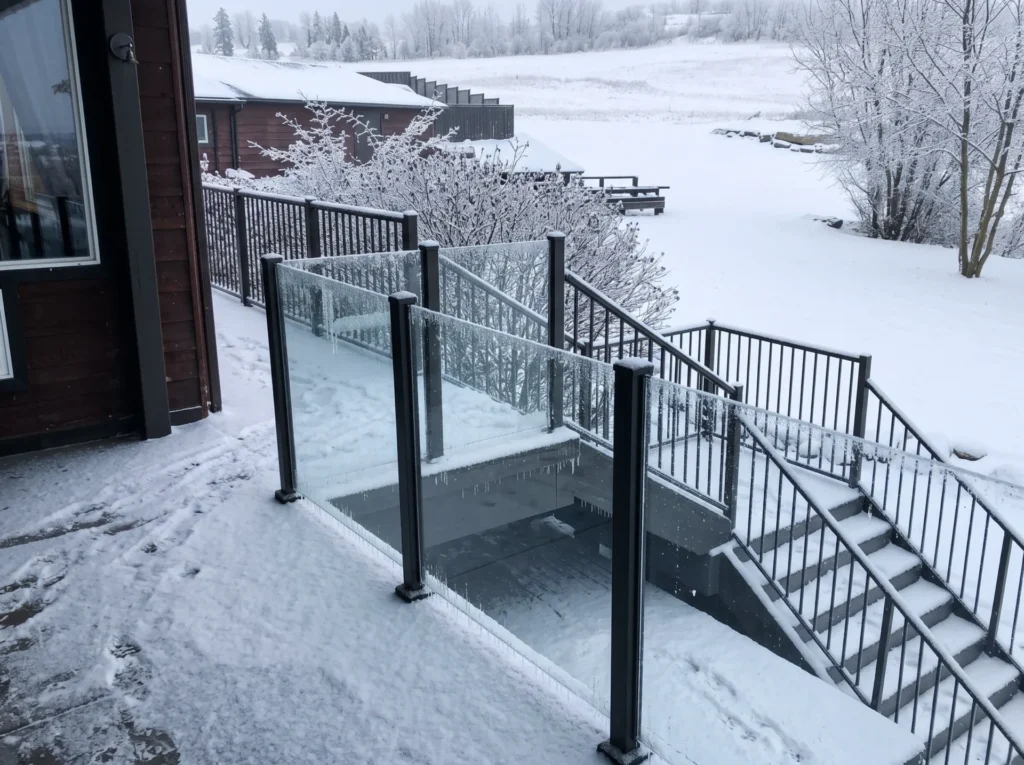
A clean railing is better protected than a dirty one. Over a summer, railings collect pollen, dust, tree sap, bird droppings and residue from outdoor cooking. The powder-coated finish on an aluminum railing is designed to withstand all of this, but a layer of grime holds moisture against the surface and makes it harder to see small chips or scratches that should be addressed before winter.
Washing is simple. A bucket of warm water with a small amount of mild dish soap and a soft cloth or sponge is all that is needed. Work from the top rail down, then rinse thoroughly with a garden hose. Abrasive pads, harsh solvents and high-pressure washers should be avoided, as each of these can damage the coating and create the very problem the washing is meant to prevent.
Glass panels deserve the same attention. A standard household glass cleaner with a squeegee or microfibre cloth will leave Scenic Glass and Glass Railing panels clear. Clean glass is not only about the view. It makes any chips, cracks or loose glazing seals easy to spot, and it means less buildup to deal with when the snow melts. While cleaning, check the vinyl gaskets around each panel for brittleness, gaps or trapped debris. They should sit snugly against the glass with no visible pulling away.
Cleaning is also the right moment to look closely at the finish. Minor scuffs are cosmetic and can wait. A deeper scratch that goes through the coating to bare aluminum should be sealed before winter. Aluminum forms a natural oxide layer and will not rust, but sealing the spot with colour-matched touch-up paint keeps moisture and salt from working under the edge of the coating. Our guide to protecting your aluminum railing from scratches covers this in more detail.
Checking Posts, Fasteners and Drainage
Structural checks are the most important part of any winter deck railing preparation. A full summer of use, combined with the expansion and contraction of warm days and cool nights, can loosen hardware slightly over time. Freeze-thaw movement in the deck itself will only add to that over winter, so starting the season with everything tight is the best defence.
Walk the full length of the railing and give each post a firm push and pull from several angles. A properly installed post should feel solid with no wobble or give. Then use a wrench to confirm that every accessible bolt and screw is snug, including stair rail connections, gate hinges and fascia brackets. Snug is the target, not cranked down. Overtightening can strip threads or damage the decking or rim joist beneath the post base. For a full walkthrough of this part of the process, see our seasonal aluminum railing checklist.
Drainage is the step most often overlooked. Fallen leaves, pine needles and dirt collect in the bottom rail and around post bases every autumn. When that material gets wet and freezes, it holds water against the aluminum all winter and can block the weep holes designed to let moisture escape. Scoop out any buildup by hand or with a small brush, then run water through the bottom rail to confirm it drains freely. On fascia-mounted systems, also clear debris from behind the brackets, where it tends to pack against the rim joist.
When checking a railing before winter, pay particular attention to:
- Post bases on surface-mounted systems, where decking around the plate should be free of rot or cracking
- Bracket connections on fascia-mounted systems, where the fascia board should be solid and the brackets pulled tight
- Stair railings, which see more traffic and more movement than level sections
- Gate hardware, which has moving parts that benefit from being checked and cleaned
- Any post that showed movement during the spring inspection
Snow, Ice and Deicers: Protecting Aluminum Railings Through the Season
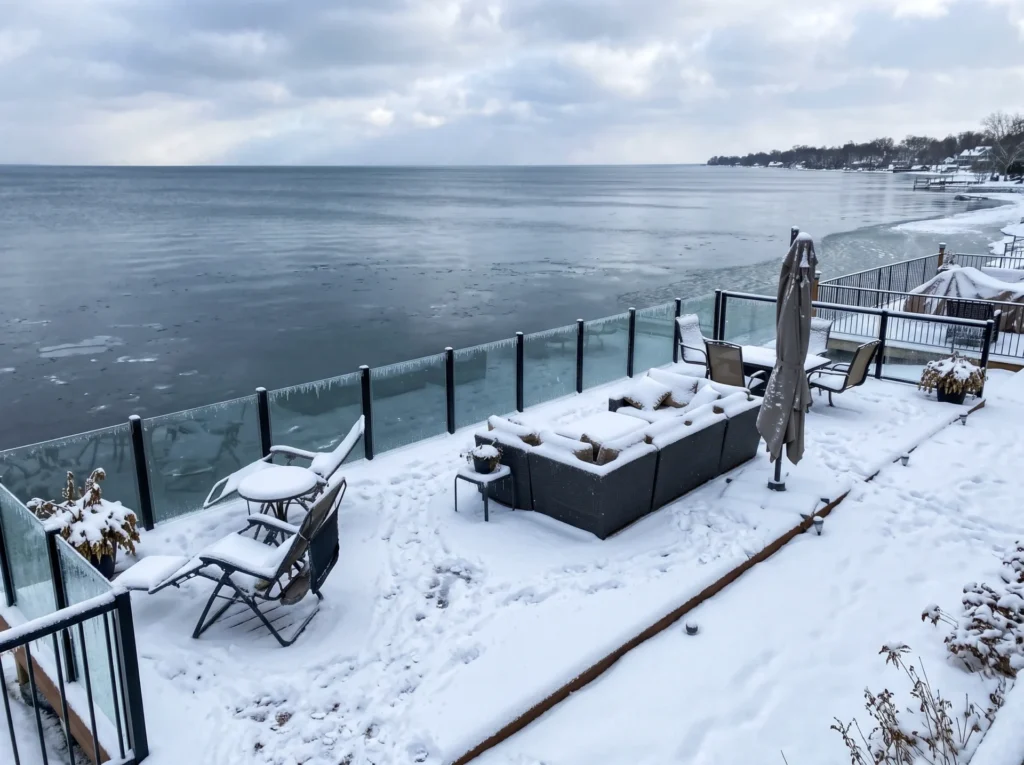
Most winter damage to railings does not come from the weather. It comes from how homeowners deal with the weather. A metal shovel edge, an ice chipper or a corrosive de-icing product can do more harm in one afternoon than an entire season of snow and cold. Knowing what to use and what to avoid is the most practical part of winterizing a deck railing.
Snow removal
Use a plastic or rubber-edged shovel near railings and glass panels, as metal edges can chip powder coating and scratch glass. Push snow away from the railing rather than into it; piling heavy, wet snow against pickets or glass panels adds unnecessary load. Never chip ice off the top rail or a glass panel. Let it melt naturally, or use warm water if access is needed quickly. Clearing the deck surface regularly also matters, since deep, compacted snow against post bases means more moisture sitting at the mounting points during every thaw.
Deicing products
Not all ice melt products are equal when it comes to metal and concrete. Rock salt (sodium chloride) is effective but corrosive to fasteners, concrete pads and the deck surface around posts. Calcium chloride is gentler on concrete but still aggressive on metal hardware. For decks and stairs with aluminum railings, the safest options are sand or traction grit, which add grip with no chemical exposure, or calcium magnesium acetate (CMA) products, which are less harsh on both metal and concrete. Whatever product is chosen, apply it to the walking surface only and keep it away from post bases where possible.
Salt exposure
Front steps and walkways near the street are the most common places for municipal road salt to be tracked onto a railing. If salt does accumulate, a quick rinse with warm water on a mild day prevents it from sitting on the finish until spring. Our post on fighting moisture and corrosion explains why aluminum and powder coating hold up so well to this kind of exposure in the first place.
Patio furniture and planters
Furniture left against a railing over winter can shift in wind or under snow load and scuff the finish, and metal legs sitting against a post all season can trap moisture. Storing furniture away from the railing, or pulling it back a foot or two, avoids the issue entirely.
How Aluminum Railings Compare to Wood and Steel in Winter
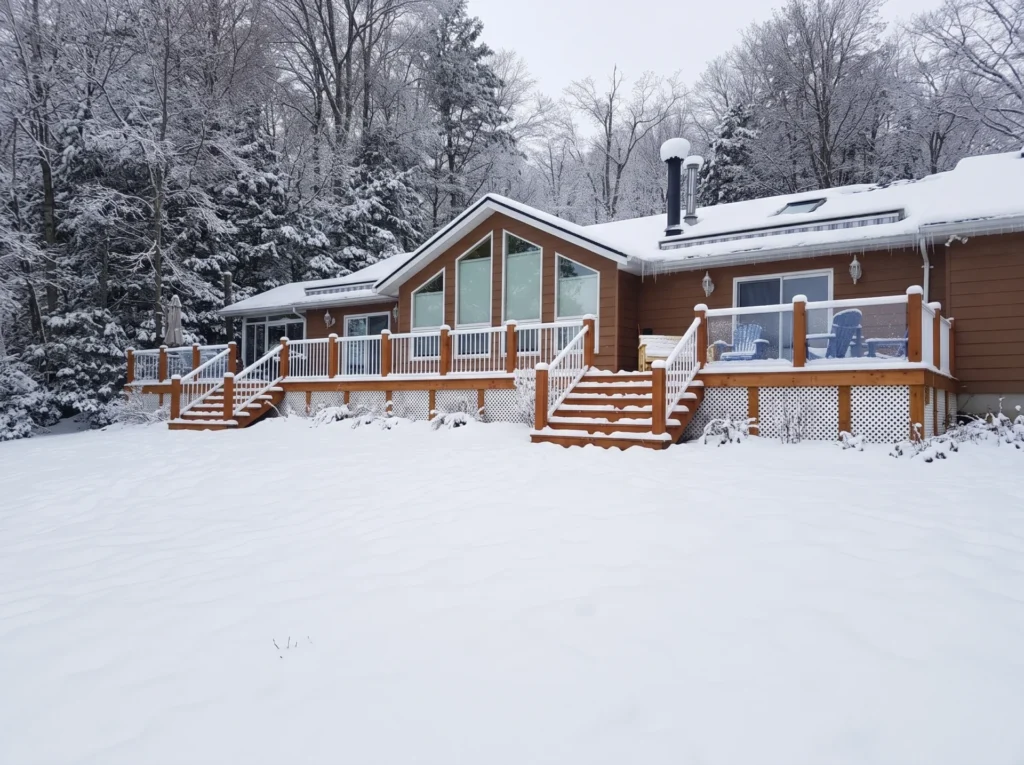
Homeowners who have maintained a wood or steel railing often expect winterizing to be a significant project. With aluminum, it is not, and understanding why helps put the fall checklist in perspective.
Moisture
Wood absorbs water, which expands when it freezes and leads to cracking, checking and eventual rot. Aluminum does not absorb moisture, so freeze-thaw cycles have no effect on the material itself.
Corrosion
Steel rusts wherever its paint or coating is scratched, and winter salt accelerates the process. Aluminum forms a natural protective oxide layer and does not rust, and the powder-coated finish adds a second barrier on top.
Structural Strength
Some materials become brittle in extreme cold. Aluminum actually gains slight strength at low temperatures, which is one reason it is used so widely in northern climates. A properly installed Century system performs the same in January as it does in July.
Ongoing Upkeep
Wood railings typically require staining or sealing before winter and again after. Steel railings often need rust treatment and repainting. Aluminum railings need a wash, a hardware check and clear drainage. The difference in time and cost adds up over the life of the railing. For a closer look at how materials compare through the seasons, see our post on the best deck railings for Canadian weather.
What to Check Again in Spring
Winterizing is half of a yearly cycle. Once the snow is gone and the deck is dry, a short follow-up walk-around closes the loop. Confirm that posts are still solid after a season of freeze-thaw movement, re-check fasteners, rinse away any salt residue, clear the bottom rail of winter debris and clean the glass. If everything held up as expected, the railing is ready for another summer with nothing more to do.
The time to involve a professional is when something does not look right. A post that stays wobbly after fasteners are tightened, a cracked glass panel or damaged decking around a mounting point are all signs of a larger issue worth having an expert assess. For most homeowners, though, winterizing and the spring follow-up are straightforward DIY tasks that take basic tools and a few hours a year.
Keep Your Deck Railing Ready for Every Season
A deck railing should be the last thing a homeowner worries about when winter arrives. With aluminum, it can be. A fall routine of cleaning, checking hardware, clearing drainage and choosing the right snow and ice tools is all that stands between an exposed outdoor structure and one that comes through the harshest months of the year unchanged.
Century Aluminum Railings systems are designed for exactly this kind of climate, with powder-coated finishes, tempered glass and engineered mounting options built to handle snow, ice, salt and temperature swings year after year. Explore our full range of glass, picket, pipe and Scenic Glass railing systems to find the right fit for your home, and reach out to our team or find a dealer near you with any questions. We’re here to help you choose a railing that looks good and performs well in every season.








0 Comments